How to Verify a Chinese Transformer Factory Before You Procure
How to Verify a Chinese Transformer Factory Before You Procure
Why Factory Verification Matters More Than Price
A transformer is a 25-30 year asset. If the manufacturer cuts corners on materials, processes, or testing during production, the consequences show up years later — in the form of premature insulation failure, dissolved-gas alarms, or catastrophic in-service breakdown. The cost of a single failure typically exceeds the original procurement savings many times over.
This guide lays out the verification steps we recommend for any buyer evaluating a Chinese transformer supplier — whether you are sourcing directly, through a trading company, or through an engineering partner like Apex Power Systems.
Step 1: Confirm the Factory Is a Real Manufacturer, Not a Trading Company
This is the single most important check. Many companies that look like manufacturers online are actually trading companies with no production capability. They subcontract production to unknown factories and have no control over quality.
How to verify:
- Request the business license (营业执照). Look for the registered scope (经营范围) — it should include 变压器制造 or 变压器生产, not just 销售/贸易.
- Verify on the National Enterprise Credit Information Publicity System (国家企业信用信息公示系统) at https://www.gsxt.gov.cn. The registration should show manufacturing scope and at least 5-10 years of operating history.
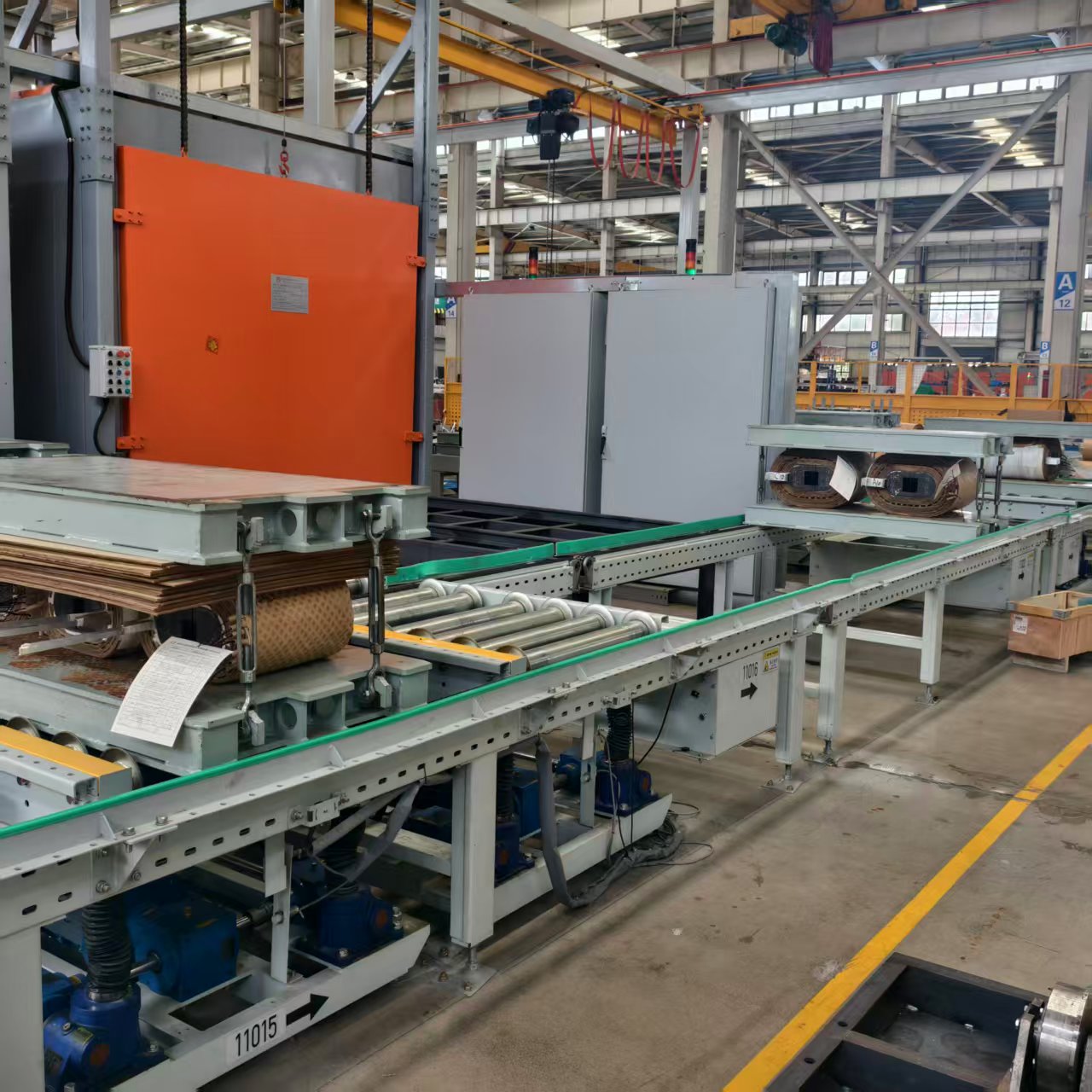
- Visit the registered address. A trading company often has a small office; a real factory has a production floor with winding, core-assembly, and test equipment.
- Look for the company's own certification in its own name (UL, CE, CCC certificates all show the certificate holder). A trading company will not have certifications in its own name.
Red flag: if the supplier is reluctant to provide the business license or asks you to keep the relationship confidential, walk away.
Step 2: Audit Production Capability and Capacity
A real factory should be able to demonstrate:
Equipment
- Winding machines for both LV and HV windings (CNC-controlled foil or wire winding is the modern standard; hand-winding is acceptable for very small units only)
- Core-cutting lines for step-lap or mitered core joints
- Vacuum oven for transformer dry-out before oil filling
- Oil purification plant for on-site oil treatment
- Routine test bay with at least these instruments: voltage regulator, current injector, transformer turns ratio (TTR) meter, insulation power factor tester (e.g., Doble M4000 or equivalent), partial discharge detector, oil dielectric tester, impulse generator (for type test at higher voltages)
Capacity
- Maximum MVA per unit (and whether they have actually produced units at that rating — claims are different from track record)
- Annual unit output (real factories range from 200 to 2,000+ MV-class units per year depending on size)
- Workforce size and engineering headcount (a serious manufacturer should have at least 50-100 production workers and 10-20 engineers)
Quality Management
- ISO 9001 certificate issued by an accredited body (check the certification body is IAF-accredited)
- ISO 14001 (environmental) and ISO 45001 (occupational health) for serious international suppliers
- Internal quality control procedures documented
Step 3: Verify Type-Test Certificates Are Valid
Type tests are expensive and are typically conducted at third-party labs. A factory claiming compliance with IEC 60076 must be able to produce certificates that:
- Are issued by an accredited laboratory (look for CNAS, A2LA, or ILAC accreditation marks)
- Cover the specific voltage class and MVA rating you are procuring (a 35kV type test certificate does not cover 110kV)
- Are within their validity period (typically 3-5 years for many standards)
- Match the actual product family you are sourcing (a certificate for oil-immersed power transformer does not cover dry-type units)
For high-voltage units (110kV and above), independent short-circuit testing at KEMA, CESI, or similar internationally-recognized labs is a strong indicator of design robustness. Few Chinese factories have done this; ask whether the specific design has been short-circuit tested.
Step 4: Check Export Track Record and References
A factory that has exported to your destination country before will understand the local certification requirements and customs procedures. Ask for:
- Bill of lading copies for previous exports (a real factory will have these on file)
- Customer references — particularly in your industry and voltage class
- Export license if your country requires specific export documentation
- Local service presence in your destination country (or partners who can provide warranty support)
For specific industries, ask for:
- Mining: Mine-spec certifications, references from mining operations
- Renewable energy: References from utility-scale solar or wind projects
- Utility: References from national grid operators
- Rail/traction: References from rail operators
Red flag: a factory that claims to serve every industry with no specific reference for yours.
Step 5: Financial Health and Longevity
A transformer is a long-term commitment. If the supplier goes out of business during warranty, you are stuck. Verify:
- Years in business (minimum 10 years preferred for power-class transformers)
- Registered capital (typically RMB 50M+ for serious manufacturers)
- Credit rating if available (Chinese credit rating agencies include 3A 信用)
- Court litigation history (search the China Judgments Online database 中国裁判文书网 for the company's name; significant unresolved contract disputes are a red flag)
For high-value or long-lead projects, consider engaging a third-party sourcing agent in China to do an on-site audit before placing the order.
Step 6: Witness Testing — Even If You Cannot Travel
Even when you cannot physically attend the FAT, several verification options exist:
- In-house witness via video call. Most serious factories can stream the test sequence live with English-speaking technicians walking through each test in real time. The test report and oscillograms can be signed off by your representative remotely.
- Independent third-party inspection. SGS, Bureau Veritas, TUV, and Intertek all offer transformer factory inspection services. A 2-3 day on-site inspection by an experienced inspector (typically USD 1,500-3,000) catches most major issues.
- Independent test witnessing. Arrange for a transformer testing expert from your country or from a third-party lab (KEMA, CESI, or local labs) to attend the FAT.
For projects above USD 200,000, independent inspection is worth the cost. For projects below USD 100,000, video witness is usually sufficient if the supplier has a verified track record.
How Apex Power Systems Simplifies This Process
As the authorized international trade partner of Tianhong Power Technology Co., Ltd., we have completed all six verification steps on Tianhong's behalf:
- Verified business license and 10+ years of operating history
- Audited production equipment, capacity, and quality management
- Validated UL, CE, CCC, and 3A Credit certificates
- Confirmed export track record across South America, Europe, and the Middle East
- Reviewed financial standing and 3A credit rating
- Established video and in-person witness testing protocols
For every project we manage, the client receives a Certification Coverage Note documenting the specific standards, certificate numbers, and validity periods relevant to their shipment. This is included in every project quotation.
If you would like our engineering team to evaluate a Chinese supplier you are considering — or to qualify an alternative to Tianhong for a specific project — submit your project specification and we will respond with a tailored assessment.
For technical questions, you can also chat with our engineering team directly on WhatsApp: [+86 132-0157-1341](https://wa.me/8613201571341).
---
*This article provides general procurement guidance. Specific verification procedures vary by project size, voltage class, and destination country regulations. Always confirm supplier credentials with the relevant accreditation bodies before placing purchase orders.*
Need specific technical advice for your project?
Submit your project details (voltage class, capacity requirements, installation environment) and our engineering team will provide tailored transformer selection recommendations and budget references.
Submit Your ProjectRelated Articles
MV/HV Transformer Selection Guide: Choosing the Right Type by Application Scenario
2026-06-10
Quality AssuranceQuality Verification for Overseas Transformer Procurement: From Factory Audit to FAT
2026-06-12
Special ApplicationsTransformer Selection for Extreme Environments: High Temperature, Humidity, and Altitude Solutions
2026-06-15
Need Technical Support?
Our engineering team is ready to help with transformer selection, quality verification, and technical specification questions.
Get Expert Advice